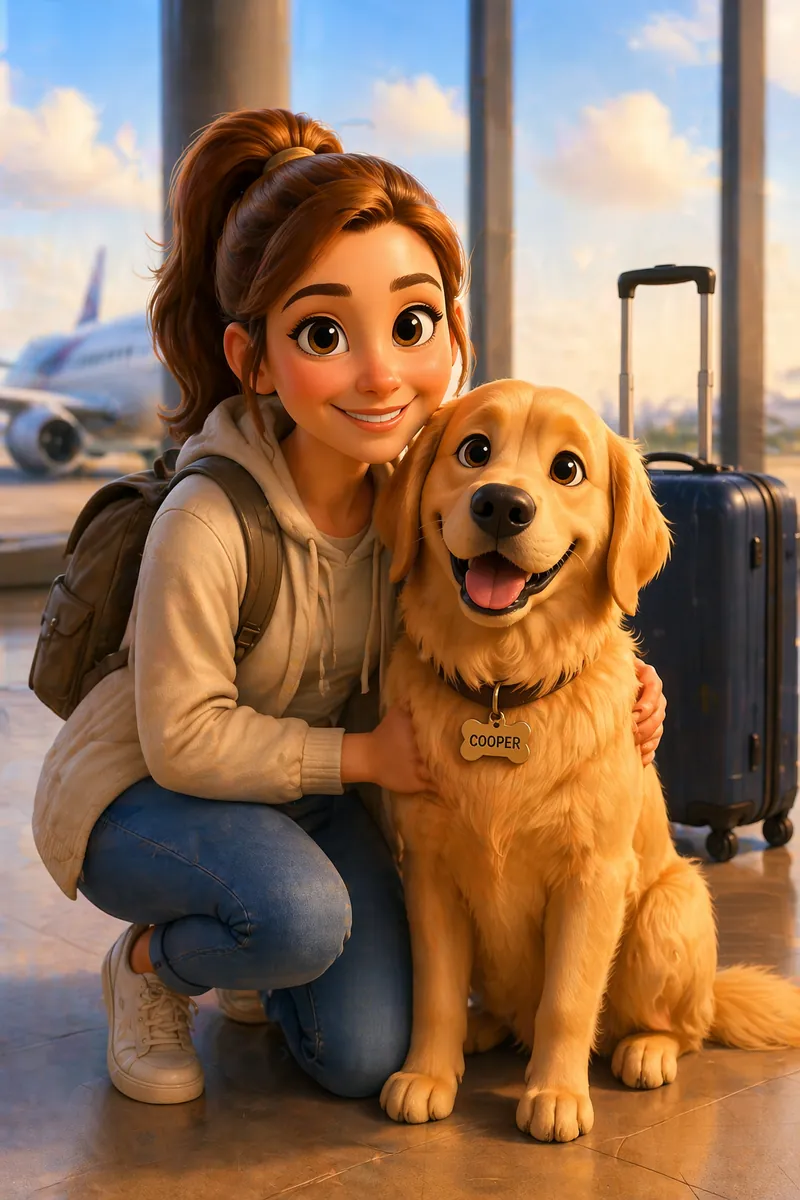
“I rescued Tafoukt from a shelter in Morocco and brought her home to Paris.”
Meet all guides →
Flying with Your Pet on Singapore Airlines
I remember the first time I flew Tafoukt from Marrakech to Paris on a rescue mission. She was terrified—not of the plane itself, but of the carrier, the crowds, the unfamiliar sounds. That experience taught me something vital: flying with a pet isn't just about knowing the rules. It's about understanding your animal's needs, respecting the airline's safety standards, and preparing with the kind of care you'd give to any family member crossing borders.
Singapore Airlines has clear, practical policies for traveling with cats and dogs. Whether you're relocating a rescue from a shelter in Southeast Asia or bringing your companion home, this guide covers everything you need to know—from carrier dimensions to health certificates to breed restrictions.
Key Numbers at a Glance
- Cabin pets: Not allowed (no cabin fee)
- Checked baggage pets: Allowed (hard-sided IATA crate required)
- Cargo pets: Allowed (hard-sided IATA crate required)
- Checked baggage weight limit: 32 kg (pet + crate combined)
- Cabin carrier dimensions: 45.7 cm L × 27.9 cm W × 27.9 cm H (soft-sided only)
- Cabin carrier weight limit: 8 kg (pet + carrier combined)
- Minimum age for cabin: 8 weeks
- Minimum age for checked baggage: 12 weeks
- Minimum age for cargo: 10 weeks
- Health certificate validity: 10 days before departure
- Heat embargo threshold: 29.4°C (85°F)
- Cold embargo threshold: -6.7°C (20°F)
Travel Options: Cabin, Checked Baggage, or Cargo?
Cabin Travel (Not Available)
Singapore Airlines does not permit pets in the cabin. This is a firm policy across both cats and dogs. If you were hoping to keep your pet with you during the flight, you'll need to choose checked baggage or cargo instead.
The upside? No cabin fee. The downside? Your pet travels separately from you, which requires extra planning and peace of mind.
Checked Baggage (Recommended for Most Travelers)
This is the most common option for pet owners flying with Singapore Airlines. Your pet travels in the hold with other luggage, but under climate-controlled conditions designed for live animals.
Requirements:
- Hard-sided IATA-compliant crate (soft-sided carriers are not accepted)
- Maximum combined weight: 32 kg (pet + crate)
- Minimum age: 12 weeks
- Attached water bowl that can be filled from outside the crate
- Absorbent liner inside the crate
- "Live Animals" labels with orientation arrows on the crate
- Adequate ventilation on all sides
- Advance booking required
- Health certificate (issued within 10 days of departure)
When I flew Tafoukt via checked baggage, the hardest part wasn't the logistics—it was trusting the system. But Singapore Airlines' climate-controlled holds are designed specifically for this. Your pet won't experience the cabin pressure changes you do; the hold is pressurized and temperature-regulated.
Cargo (For Larger Pets or Special Circumstances)
If your pet exceeds the 32 kg checked baggage limit or you need more flexibility with timing, cargo is an option. The requirements are similar to checked baggage, but cargo offers dedicated handling and sometimes more scheduling flexibility.
Key differences:
- Hard-sided IATA crate required
- Minimum age: 10 weeks
- Water bowl and absorbent liner required
- Advance booking essential
- Subject to heat and cold embargoes (see below)
- Health certificate required
Carrier Requirements: Getting the Right Crate
This is where precision matters. A carrier that's too small stresses your pet; one that's too large doesn't meet airline standards.
For Checked Baggage & Cargo
Hard-sided crate is mandatory. Soft-sided carriers are not accepted for hold travel. The crate must be IATA-compliant, which means it meets international standards for ventilation, strength, and safety.
Specifications:
- Hard plastic or metal construction
- Ventilation openings on at least three sides
- Attached water bowl (external fill)
- Absorbent mat or liner inside
- "Live Animals" labels with up/down arrows clearly marked
- Secure locking mechanism
The crate should be large enough for your pet to stand, turn around, and lie down comfortably. Too much space, however, and your pet may be thrown around during turbulence. Ask your vet or the airline for specific sizing recommendations based on your pet's measurements.
For Cabin (If You Were Considering It)
Since cabin travel isn't available on Singapore Airlines, this is moot. But for reference: cabin carriers must be soft-sided and fit under the seat in front of you (approximately 45.7 cm × 27.9 cm × 27.9 cm, with a combined weight limit of 8 kg).
Health Certificates & Documentation
This is non-negotiable. You will not board without it.
What you need:
- Health certificate issued by a licensed veterinarian
- Issued within 10 days of your departure date (some destinations require 7 days—verify with your destination country)
- Confirmation that your pet is fit to fly
- Vaccination records (especially rabies, depending on destination)
- Microchip information (if applicable)
Get this done as close to your departure date as possible. A certificate issued 10 days early is valid; one issued 11 days early is not. Your vet will know the requirements for your destination country—ask them to include any destination-specific health requirements on the certificate itself.
For international relocations (like my rescue work), some countries require import permits in addition to health certificates. Check with your destination country's agricultural or customs authority well in advance.
Breed Restrictions: Brachycephalic Breeds
Singapore Airlines restricts certain breeds due to respiratory risks during flight. These are primarily brachycephalic (snub-nosed) breeds.
Restricted cat breeds include: Persian, Exotic Shorthair, Himalayan, Burmese, British Shorthair, Scottish Fold
Restricted dog breeds include: Bulldog (all types), Pug (all types), Boston Terrier, Boxer, Shih Tzu, Lhasa Apso, Pekingese, French Bulldog, Shar-Pei, Chow Chow, Japanese Chin, Cavalier King Charles Spaniel, Mastiff (all types), Staffordshire Bull Terrier, American Pit Bull Terrier, and others.
If your pet is a mixed breed with brachycephalic characteristics, contact Singapore Airlines directly to confirm eligibility. Some airlines make exceptions for mixed breeds with less pronounced features.
This restriction exists for good reason: these breeds have narrower airways and are more prone to respiratory distress under the stress of air travel. It's not discrimination—it's animal welfare.
Temperature Embargoes: When Your Pet Can't Fly
Singapore Airlines will refuse to transport pets if temperatures at the origin or destination exceed safe thresholds.
Heat embargo: 29.4°C (85°F) or higher
Cold embargo: -6.7°C (20°F) or lower
These aren't arbitrary limits. Pets in cargo holds can experience temperature stress even with climate control. If you're flying during summer to a hot destination, or winter to a cold one, check the forecast carefully. If temperatures are borderline, your pet may be denied boarding on the day of travel.
Some airlines allow travel in colder conditions if your vet provides an acclimation certificate. Ask Singapore Airlines if this applies to your situation.
Special Cases: Service Dogs & Emotional Support Animals
Trained guide dogs: Service dogs have a separate policy. They typically travel at their handler's feet in the cabin with no carrier required, no breed restrictions, and no fee. Advance booking is still required.
Emotional support animals (ESAs): Singapore Airlines does not recognize ESA letters. Your emotional support animal travels under the standard pet policy with all applicable fees, restrictions, and carrier requirements. This is consistent with most international airlines.
Sedation: What You Should Know
IATA (International Air Transport Association) prohibits sedation of pets during air travel. A sedated animal cannot maintain equilibrium or respond to emergencies—which creates safety risks.
Do not sedate your pet unless explicitly instructed by both your veterinarian and Singapore Airlines. If your pet has severe anxiety, discuss calming alternatives with your vet (pheromone sprays, anxiety wraps, etc.) well before your flight.
What You Need to Do: Pre-Flight Checklist
- 8-12 weeks before departure: Contact Singapore Airlines to pre-book your pet. Confirm all requirements for your specific route and destination.
- 6-8 weeks before: Purchase or confirm your IATA-compliant hard-sided crate. Practice having your pet spend time in it at home.
- 4 weeks before: Schedule a vet appointment for health certificate and vaccination updates. Confirm destination-specific requirements (import permits, quarantine, etc.).
- 10 days before: Get your health certificate issued. Do not get it earlier—it's only valid for 10 days.
- 1 week before: Confirm your booking with Singapore Airlines. Double-check all documentation.
- Day before: Prepare the crate with absorbent liner, water bowl, and familiar bedding. Exercise your pet well.
- Day of flight: Arrive early. Bring all documents (health certificate, booking confirmation, ID). Keep your pet calm and hydrated before check-in.
A Deeper Perspective: Why This Matters
When I rescue dogs from shelters in Morocco, I'm not just moving animals—I'm opening doors. These policies exist because international pet travel infrastructure has evolved to protect animals. Every requirement—the health certificate, the IATA crate, the temperature checks—exists because someone learned the hard way that corners cut cost lives.
Whether you're relocating a rescue or traveling with a beloved companion, respect the process. Your pet's safety depends on it. And if you're considering rescue work across borders, know that these same standards make it possible for shelter animals to find homes in countries with better resources and care. That's worth the paperwork.
Get your free personalized travel plan from Pawgo to ensure you haven't missed anything specific to your route and pet.
Need More Information?
For Singapore Airlines–specific questions not covered here, contact their special assistance team directly. For destination-specific requirements, check with your destination country's agricultural or customs authority. And always consult your veterinarian—they know your pet's health better than any airline policy.
Data verified from official Singapore Airlines sources and IATA Live Animals Regulations. Last updated: January 2025. Pet travel policies change—always confirm directly with the airline before booking.
Auto-generated from verified data · Last updated: April 23, 2026