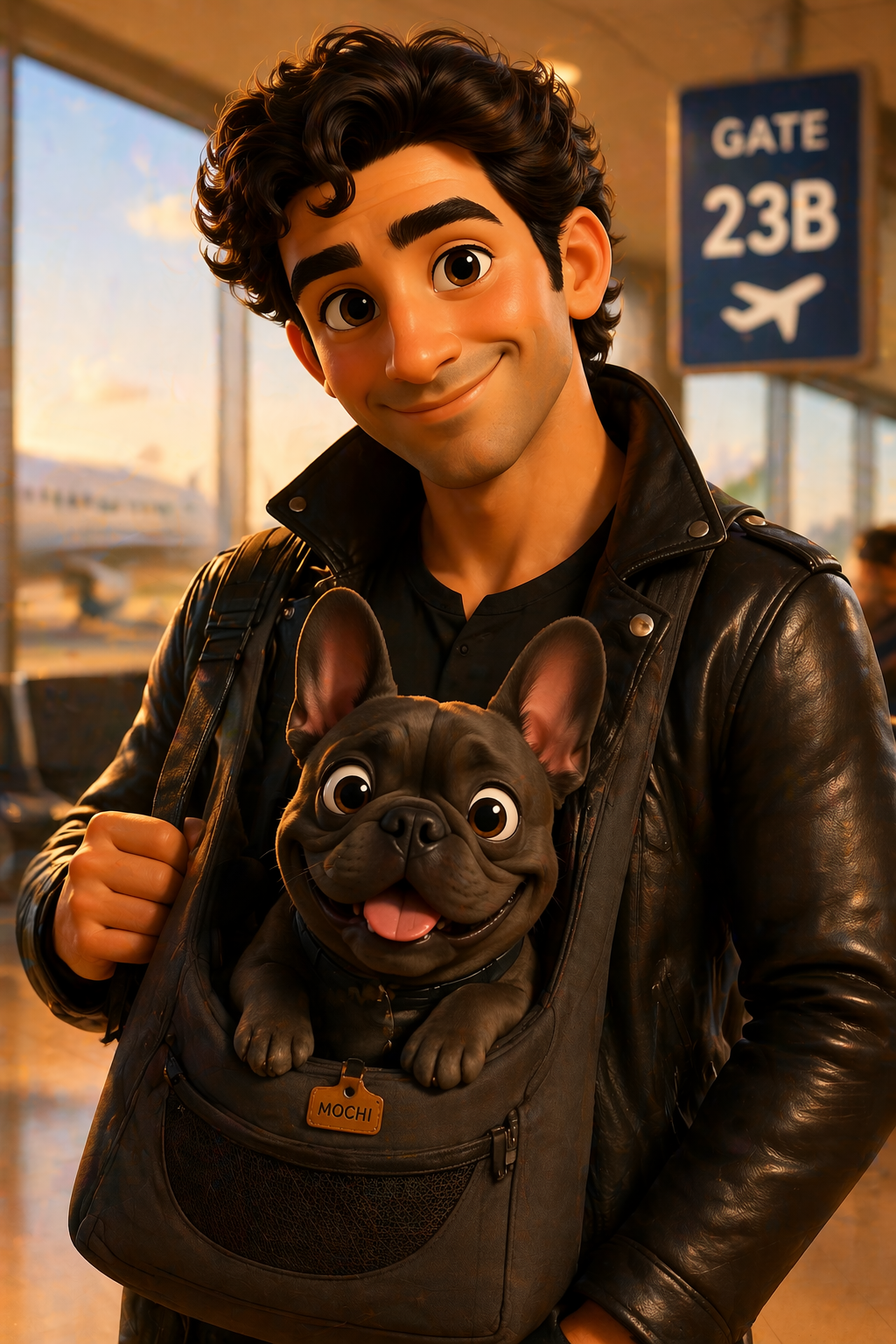
Marco · with Mochi (French Bulldog, 6kg) “Mochi judges the queue length, not me.” Meet all guides →
About this guide ↓
This guide was generated by Pawgo's AI using verified data from official sources. Marco is a fictional persona — the data is real.
Here's what nobody tells you about Anguilla: it writes its own pet-import rules and Britain's do not apply, which catches almost everyone. And its breed rule has teeth — not a refusal at the desk, a seizure. Mochi judges the queue length, not me, but I would read this one twice before putting a bully-type dog on a plane. The rest of the file is short and manageable.
Pet import to Anguilla is regulated by Government of Anguilla. The core requirements are summarized below: a microchip, a rabies vaccine within the right window, and a government-endorsed health certificate. Some destinations also require a titer test or short quarantine — those are flagged in the table.
Who sets the rules here
Anguilla sets its own pet-import rules. The national rules of the United Kingdom do not apply here.
Official source
gov.ai
Relationship to the United Kingdom
sets its own rules
How Anguilla handles your pet
Each fact comes straight from the operator’s published policy. Tap the to read the exact wording; the opens the source page.
Health & documents
Microchip · Required✓ Yesverified 2026-10-04
Import permit · Required✓ Yesverified 2026-09-15
Import permit · Issuing authorityGovernment of Anguillaverified 2026-09-15
Health certificate · Required✓ Yesverified 2026-09-15
Health certificate · Validity days14 daysverified 2026-10-04
Health certificate · Government endorsed✓ Yesverified 2026-09-15
The certificate is valid for 14 days after issuance, so the vet appointment has to sit inside the two weeks before arrival. A certificate written earlier in the planning expires in transit. Book the vet once the flight is confirmed and work backwards from the arrival date rather than from the departure date.
No person may import a dog of the type known as the pit bull terrier or any other ferocious dog, and a dog so imported is seized and forfeited to the Crown. The owner can rebut it only by satisfying the Chief Veterinary Officer that the dog is neither type. Resolve that question with the Chief Veterinary Officer in writing before travelling, not on arrival.
The certificate's 14-day validity is the scheduling constraint on this trip rather than any fee. It has to cover the journey through to arrival, so a connection that adds a night cuts into it. Confirm the full itinerary before the vet visit, because a 14-day document does not survive a rerouting that adds days at the front.
So Anguilla: its own rulebook rather than Britain's, a microchip, an import permit, and a 14-day certificate. The breed rule is the serious one — seizure and forfeiture, with a rebuttal only through the Chief Veterinary Officer — so settle it in writing first if there is any doubt. Build a personalized plan with your dates and we'll sequence the 14 days against your arrival.
ISO 11784/11785 — the universal microchip standard.
FAVN
Fluorescent Antibody Virus Neutralization — a rabies serology test required by rabies-free destinations.
Brachycephalic
Snub-nosed breeds (French Bulldogs, Pugs, Persians, Himalayans) with restricted airline acceptance due to heat-stress risk.
AVIH
Animal Vehicle In Hold — IATA's term for cargo pet shipment, with fees that vary by carrier and route.
Auto-generated from verified government data · Last updated: August 13, 2026
Frequently Asked Questions
Does Anguilla require rabies vaccination for dogs?
Yes, Anguilla requires a rabies vaccination for imported dogs. There is a 30-day waiting period after vaccination. Exact timing depends on your origin country — compute your timeline at www.pawgo.fr.Build my pet's travel plan →
Does Anguilla require a microchip for pets?
Yes, Anguilla requires an ISO-compliant microchip. The microchip must typically be implanted before rabies vaccination. Get your full checklist at www.pawgo.fr.Build my pet's travel plan →
What health certificate does Anguilla require for pets?
Anguilla requires a veterinary health certificate for imported pets. It must be issued within 14 days of travel. Government endorsement is required. Get exact document requirements at www.pawgo.fr.Build my pet's travel plan →
Do I need a pet import permit for Anguilla?
Yes, Anguilla requires an import permit for pets. Lead time varies — apply well in advance. Get your full preparation timeline at www.pawgo.fr.Build my pet's travel plan →
Does Anguilla have breed restrictions for pets?
Yes, Anguilla has breed-specific restrictions. Restricted breeds include: Pit Bull Terrier. Check if your breed is affected at www.pawgo.fr.Build my pet's travel plan →
Does my pet need a microchip for Anguilla?
Yes. Anguilla requires an ISO-standard microchip. Anguilla has not published a rule on the order, so have it fitted before the rabies vaccination where you can — many countries and airlines require that sequence.Build my pet's travel plan →
How long before travel must the rabies vaccine be given for Anguilla?
The rabies vaccine must take effect at least 30 days before entry. Travelling before that window makes the vaccination invalid at the border.Build my pet's travel plan →
What if my flight is delayed past my health certificate validity?
If the certificate window expires before you board, you'll need a re-issue. Build a 1-2 day buffer between the cert date and departure to absorb minor delays.Build my pet's travel plan →
What happens if I forget a document?
At the destination airport: at best, an extended inspection while you produce backup; at worst, the pet is held in quarantine or returned to origin at your cost. Bring printed copies.Build my pet's travel plan →
Traveling to Anguilla?
Get a personalized travel checklist with exact deadlines for your pet.