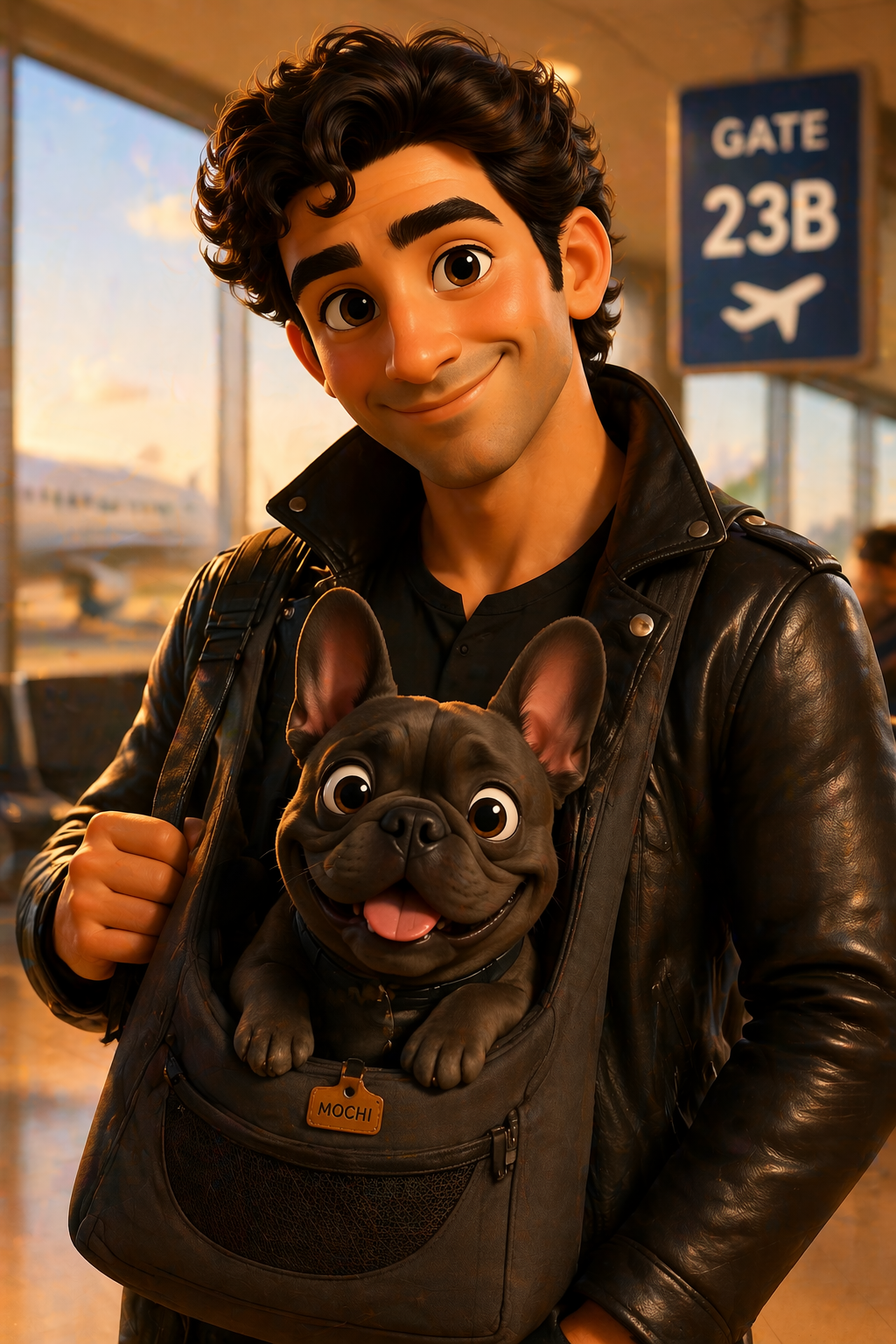
Marco · with Mochi (French Bulldog, 6kg) “Mochi judges the queue length, not me.” Meet all guides →
About this guide ↓
This guide was generated by Pawgo's AI using verified data from official sources. Marco is a fictional persona — the data is real.
Okay, Norway. Beautiful, cold, and absolutely serious about quarantine for pets that don't tick every box. Mochi and I have crossed a few borders, but this one made me read every line twice. Here's what nobody tells you: the quarantine requirement is the part that quietly wrecks plans, so get the sequencing right before you even think about booking anything.
Bringing a pet to Norway requires three documents in the right order: a microchip, a rabies vaccine within the destination's wait window, and a government-endorsed health certificate. The table below lays out exactly what's required, what's not, and where each rule comes from.
How Norway handles your pet
In practice, it is not possible to bring street dogs and street cats to Norway. The exception is if you have lived with the animal for six months before traveling here.
Each fact comes straight from the operator’s published policy. Tap the to read the exact wording; the opens the source page.
Tapeworm treatment · Vet documented✗ Noverified 2026-07-16
Internal parasite treatment · Drug acceptedpraziquantelverified 2026-07-16
Timing chain
Day -90 microchip implant · Day -21 rabies vaccine deadline · Day -10 health certificate issued · Day 0 arrive at customs
Conditional requirements
These rules apply only to pets with a specific travel history. Most travelers can ignore them — but if one applies to you, skipping it can mean denied entry.
Pet arriving from an unlisted (non-Annex II) third country — If your pet has been in one of 111 higher-risk countries in the last 6 months:
Rabies titer (blood) test: Required
Ports of entry
Oslo Airport
verified 2026-08-31
The microchip must be implanted before the rabies vaccination. Book the chip first, then schedule the rabies shot on a later date. A vaccination given before the chip does not count toward Norwegian entry. Confirm the vet records both dates clearly on the certificate. Order matters: chip today, vaccine after, or the whole timeline resets and travel gets blocked.
Notify the Norwegian Food Safety Authority at least 48 hours before arrival. Send the notification early to avoid a long wait while the border check is carried out. Missing the 48-hour window means delays at the point of entry. Mark the deadline against the exact arrival time and submit the arrival details two full days ahead.
Dogs travelling regularly between Norway and EU countries may receive the required treatment on a rolling schedule, with a maximum gap of 28 days between treatments instead of before each trip. Stay inside the 28-day window and the pattern holds for repeat crossings. Let the gap exceed 28 days and the pre-trip treatment requirement returns for that journey.
Norway rewards the careful and punishes the last-minute. Quarantine, the chip-then-vaccine order, the 48-hour heads-up — miss one and you're stuck at a window explaining yourself while the queue grows. Don't wing it. Build a personalized plan with Pawgo's plan-builder for your exact dates and route, so every deadline lands in order and you and your dog actually make the flight.
ISO 11784/11785 — the universal microchip standard.
FAVN
Fluorescent Antibody Virus Neutralization — a rabies serology test required by rabies-free destinations.
Brachycephalic
Snub-nosed breeds (French Bulldogs, Pugs, Persians, Himalayans) with restricted airline acceptance due to heat-stress risk.
AVIH
Animal Vehicle In Hold — IATA's term for cargo pet shipment, with fees that vary by carrier and route.
Auto-generated from verified government data · Last updated: August 14, 2026
Frequently Asked Questions
Does Norway require rabies vaccination for dogs?
Yes, Norway requires a rabies vaccination for imported dogs. There is a 21-day waiting period after vaccination. Exact timing depends on your origin country — compute your timeline at www.pawgo.fr.Build my pet's travel plan →
Is there a quarantine period for pets entering Norway?
Yes, Norway requires quarantine for imported pets. Exemptions may apply based on your origin country. Check your specific case at www.pawgo.fr.Build my pet's travel plan →
Does Norway require a microchip for pets?
Yes, Norway requires an ISO-compliant microchip. The microchip must typically be implanted before rabies vaccination. Get your full checklist at www.pawgo.fr.Build my pet's travel plan →
What health certificate does Norway require for pets?
Norway requires a veterinary health certificate for imported pets. It must be issued within 10 days of travel. Government endorsement is required. Get exact document requirements at www.pawgo.fr.Build my pet's travel plan →
Does Norway require a rabies titer test?
Yes, Norway requires a rabies titer test (FAVN). There is a 90-day waiting period after the test. Results must show ≥0.5 IU/ml. Plan your timeline at www.pawgo.fr.Build my pet's travel plan →
Does my pet need a microchip for Norway?
Yes. Norway requires an ISO-standard microchip, and it must be fitted before the rabies vaccination to be valid.Build my pet's travel plan →
How long before travel must the rabies vaccine be given for Norway?
The rabies vaccine must take effect at least 21 days before entry, and can be given from 12 weeks of age. Travelling before that window makes the vaccination invalid at the border.Build my pet's travel plan →
Does Norway require a rabies antibody (titer) test?
Only for pets arriving from a country not on the EU's listed (Annex II) countries. Those pets need a rabies antibody titer test from an approved lab. Pets from EU or listed countries do not.Build my pet's travel plan →
What if my flight is delayed past my health certificate validity?
If the certificate window expires before you board, you'll need a re-issue. Build a 1-2 day buffer between the cert date and departure to absorb minor delays.Build my pet's travel plan →
What happens if I forget a document?
At the destination airport: at best, an extended inspection while you produce backup; at worst, the pet is held in quarantine or returned to origin at your cost. Bring printed copies.Build my pet's travel plan →
Traveling to Norway?
Get a personalized travel checklist with exact deadlines for your pet.