Flying Your Pet from Germany to Japan: The Real Timeline & Requirements
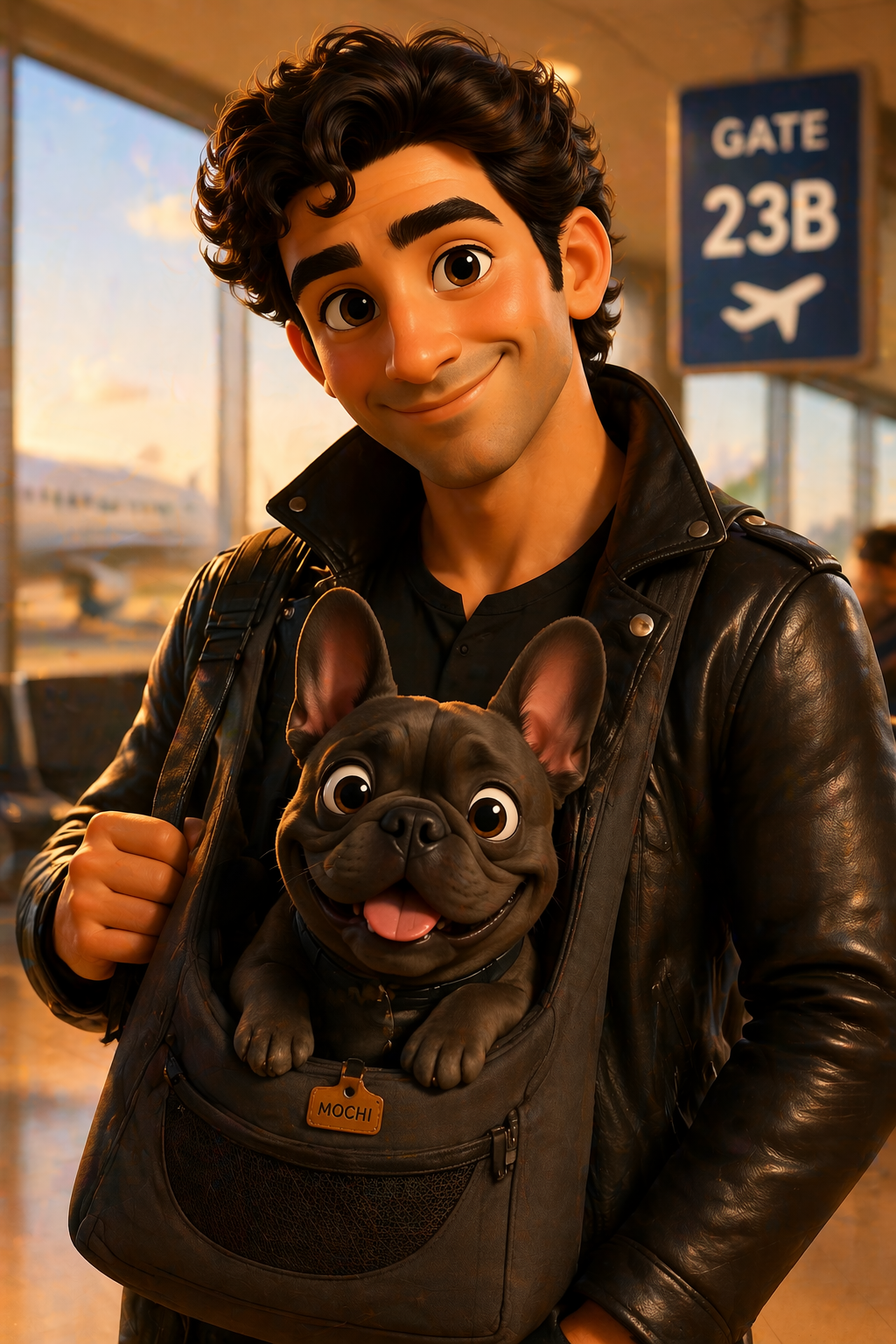
Here's what nobody tells you: I learned the hard way that flying Mochi, my 11kg French Bulldog, to Japan wasn't just about booking a flight. It was a seven-month bureaucratic marathon that started the moment I decided to move. If you're planning to take your dog or cat from Germany to Japan, buckle up—this guide covers everything I wish someone had told me before I started.
The Brachycephalic Breed Reality Check
Let me be blunt: Mochi cannot fly to Japan in the cabin. Every single airline serving this route—Lufthansa, Air France, British Airways, Delta, and Turkish Airlines—bans brachycephalic breeds (flat-faced dogs like French Bulldogs, Pugs, and Boston Terriers) from cabin travel. It's not negotiable, and it's not discrimination—it's a safety rule based on respiratory risk during flight.
Cargo transport exists, but I'm going to be honest: I would never put Mochi in cargo. The stress, temperature fluctuations, and lack of monitoring make it genuinely dangerous for a brachy breed. If you have a flat-faced dog, you need to seriously consider whether this move is worth the risk. For a detailed breakdown of your options, check out our brachycephalic breed flying guide.
The 7-Month Minimum Timeline: Start Now
Japan's import requirements are strict because the country is officially rabies-free. Here's the non-negotiable sequence:
- Month 1: Get your pet microchipped (ISO 11784/11785 standard) BEFORE any rabies vaccination. This is critical—the microchip must precede the vaccine or the vaccination is invalid.
- Month 1–2: First rabies vaccination (your pet must be at least 13 weeks old). Wait 21 days minimum.
- Month 2–3: Second rabies vaccination (booster, at least 30 days after the first). Wait another 21 days.
- Month 3–4: Blood draw for rabies antibody titer test at an OIE-approved lab. The test must happen at least 30 days after the second vaccination. Approved labs include APHA Weybridge, Kansas State University, and Anses Nancy.
- Month 4–7: The mandatory 180-day waiting period begins from the date of the satisfactory titer result (minimum 0.5 IU/mL). You cannot enter Japan before this period ends.
- Month 6–7: Submit your Notice of Importation (Form A) to the Japan Animal Quarantine Service at least 40 days before your planned arrival date.
I'm not exaggerating when I say this timeline is non-negotiable. Japan doesn't offer shortcuts, even for compliant pets. The 180-day wait is mandatory.
Documents You'll Need (The Checklist)
Before you travel, you need:
- Microchip documentation: Proof of ISO 11784/11785 standard microchip implantation, with the chip number recorded.
- Rabies vaccination records: Two vaccinations documented by your German veterinarian, with dates and vaccine batch numbers.
- Rabies titer test results: Blood work from an approved lab showing ≥0.5 IU/mL antibody level, dated at least 30 days after the second vaccination.
- Health certificate: Issued by an official German government veterinarian (Amtstierarzt), endorsed by German veterinary authorities. Valid for only 10 days before travel—don't get this too early.
- Import permit (Form A): Submitted to the Japan Animal Quarantine Service at least 40 days before arrival.
For a comprehensive checklist, see our pet travel documents guide.
Germany's Export Side: What You Need to Know
Germany is an EU member state, which simplifies some things. Your pet can travel within the EU on an EU Pet Passport if you're moving to another EU country, but Japan isn't in the EU, so you'll need full documentation instead.
Key German requirements:
- Microchip must precede rabies vaccination.
- Rabies booster is required (not optional).
- Health certificate must be endorsed by your local Veterinäramt (Veterinary Office) of your Bundesland.
- No breed restrictions apply for dogs or cats leaving Germany.
Japan's Import Requirements: The Strict Reality
Japan requires:
- Microchip: ISO 11784/11785 standard, implanted before first rabies vaccination.
- Two rabies vaccinations: Primary + booster at least 30 days apart. Your pet must be at least 13 weeks old at first vaccination.
- Rabies titer test: Mandatory from an OIE-approved lab. Minimum 0.5 IU/mL. Blood drawn at least 30 days after second vaccination.
- 180-day waiting period: Mandatory from the date of satisfactory titer result. Non-negotiable.
- Health certificate: Issued by official government veterinarian, endorsed by German authorities. Valid within 10 days of travel.
- Import permit (Form A): Submitted to the Japan Animal Quarantine Service at least 40 days before arrival.
- Quarantine: Minimum 12 hours at an approved facility if all paperwork is complete and submitted 40+ days in advance. Up to 180 days if non-compliant.
- Port of entry restrictions: You can only arrive at Tokyo Narita (NRT), Tokyo Haneda (HND), Osaka Kansai (KIX), or Nagoya Chubu (NGO). No other airports accept pet imports.
No breed restrictions apply for dogs or cats entering Japan, so if you have a larger dog or a cat, you're clear on that front.
Airline Comparison: Your Options (and Why Mochi Can't Use Them)
| Airline | Cabin | Cargo | Brachy OK | Weight Limit | Cabin Fee |
|---|---|---|---|---|---|
| Lufthansa | Yes | Yes | No | 8 kg | €75 |
| Air France | Yes | Yes | No | 8 kg | €75 |
| British Airways | No | Yes | No | 8 kg | N/A |
| Delta | Yes | Yes | No | 8 kg | $125 USD |
| Turkish Airlines | Yes | Yes | No | 8 kg | N/A |
The cabin weight limit of 8 kg is important: if your dog is under 8 kg and not a brachycephalic breed, you could theoretically fly in cabin with Lufthansa, Air France, or Delta. But Mochi weighs 11 kg, so even without the brachy ban, she'd be over the limit. Cargo is available on all carriers, but again—I wouldn't recommend it for a flat-faced breed.
Cats: You Have the Same Timeline
If you're traveling with a cat, the requirements are nearly identical to dogs: microchip before vaccination, two rabies vaccinations, titer test from an approved lab, 180-day wait, health certificate, import permit, and quarantine. Cats face no breed restrictions in Japan, and they're generally less at risk during air travel than brachycephalic dogs, but the timeline is just as long.
The Quarantine Question
Here's the gotcha: even if you complete everything perfectly, your pet will spend at least 12 hours in quarantine at a Japanese airport facility when you arrive. If you submit all paperwork 40+ days in advance and meet all requirements, it's just 12 hours. If you're late or non-compliant, it can stretch to 180 days—at your expense.
I wish someone had told me that "quarantine-free" doesn't exist for Japan. Plan for the 12-hour minimum and budget for potential facility fees (we're still verifying exact costs—check with the Japan Animal Quarantine Service directly).
Cost Reality Check
Budget for:
- Microchip: €50–100
- Two rabies vaccinations: €100–200
- Rabies titer test (approved lab): €150–300
- Health certificate (government-endorsed): €50–150
- Import permit processing: €100–300 (estimated—verify with MAFF)
- Quarantine facility fees: TBD (check with AQS)
- Airline cargo (if applicable): €1,500–3,000+
Total: €2,000–4,500+ before you even board a plane. It's expensive, and it's worth planning for.
Military or Service Dog? Different Rules Apply
If you're active-duty military on PCS orders (US-Japan SOFA), your base veterinary services can handle the import permit. If you have a trained guide or service dog, Japanese airlines (ANA, JAL) may accept it in cabin with documentation, but all MAFF import requirements still apply—no shortcuts on the 180-day wait or titer test.
Emotional support animals are not recognized in Japan. They're treated as regular pets with standard fees and restrictions.
Final Thoughts: Is It Worth It?
Honestly? For Mochi, I'm still figuring that out. The timeline is long, the rules are strict, and the brachycephalic ban means I can't even fly her in cabin. But if you have a healthy, non-brachy dog or cat, and you're committed to the 7-month process, it's doable. Start your paperwork now, book your approved lab early, and don't miss any deadlines—Japan doesn't give extensions.
Get your free personalized travel plan from Pawgo to track your timeline and ensure you don't miss a single step.
Data verified from official sources: German Federal Ministry of Food and Agriculture (BMEL), Japan Ministry of Agriculture, Forestry and Fisheries (MAFF), and OIE-approved laboratory standards. Information auto-updated as of April 2026.