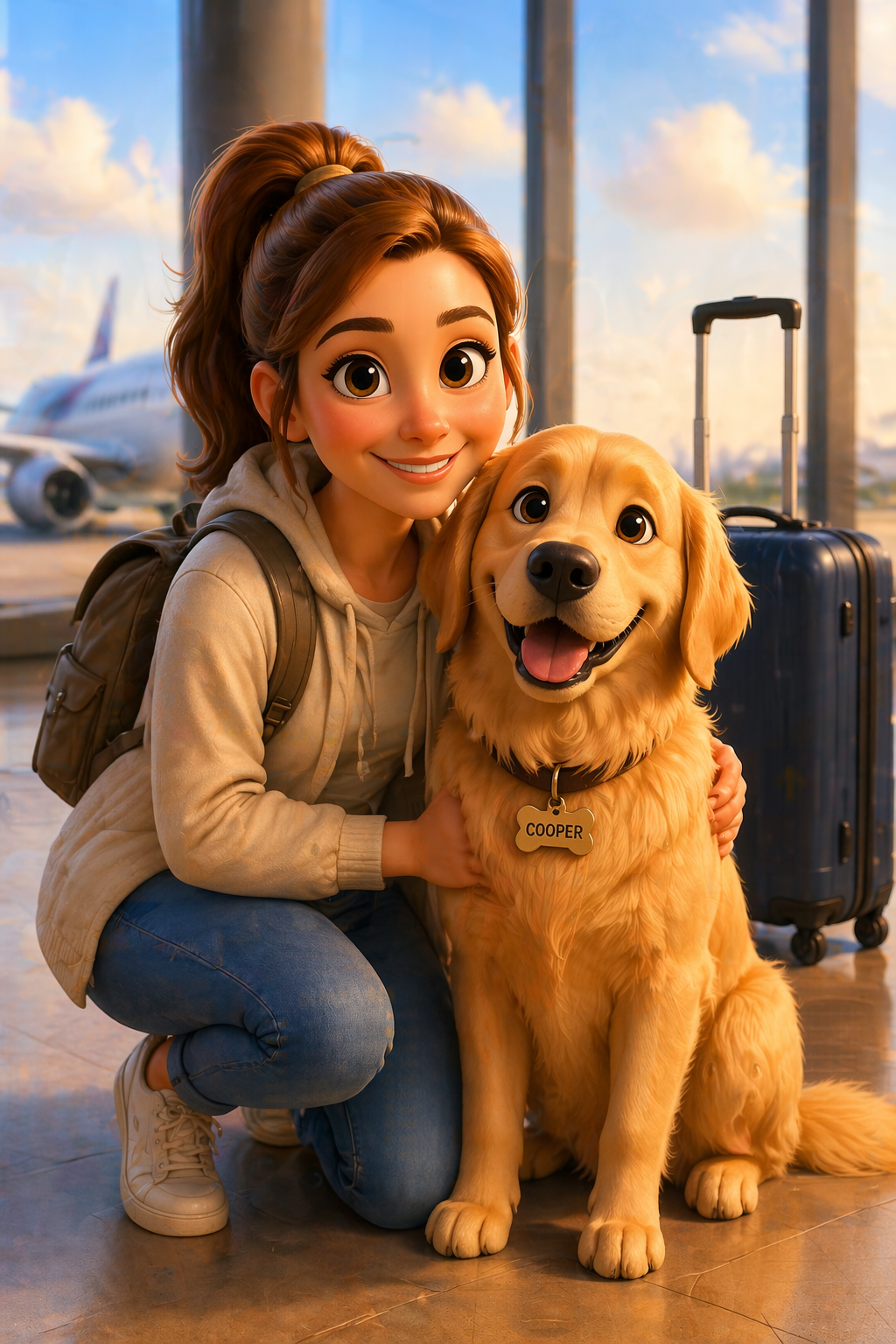
Flying with Your Pet on Windrose Airlines

I remember the first time I flew Tafoukt—my rescue Border Collie mix from Morocco—across the Mediterranean. She was nervous, I was more nervous, and I'd triple-checked every requirement. That's the thing about pet travel: the rules matter, but so does the peace of mind that comes from knowing exactly what to expect.

Windrose Airlines welcomes dogs and cats in the cabin, and they've set clear, practical guidelines to keep your companion safe and comfortable. Whether you're relocating a rescue like I did, moving to a new home, or taking your cat on an adventure, this guide covers everything you need to know.

Can Your Pet Fly in the Cabin?

Yes—both dogs and cats are allowed in the cabin on Windrose Airlines. This is genuinely good news. Cabin travel means your pet stays with you, experiences the same pressurization and temperature as the main deck, and avoids the stress of cargo holds. For rescue animals especially, this proximity can make a real difference in their comfort.

However, there are limits. You can bring one pet carrier per passenger, and your pet must meet specific size and weight requirements.

Carrier Requirements: Size & Weight

Your carrier is non-negotiable—all pets must travel in one. Windrose requires soft-sided carriers for cabin travel, which is standard across most airlines. Soft-sided carriers compress slightly to fit under the seat in front of you, which is exactly where your pet will spend the flight.

Cabin Carrier Dimensions (Dogs & Cats)

  • Length: 45 cm (17.7 inches) maximum
  • Width: 36 cm (14.2 inches) maximum for dogs; 27.9 cm (11 inches) for cats
  • Height: 26 cm (10.2 inches) maximum for dogs; 27.9 cm (11 inches) for cats
  • Combined weight (pet + carrier): 10 kg (22 lbs) maximum

These dimensions are tight—your pet needs to stand, turn around, and lie down comfortably, but not sprawl out. Measure your current carrier before booking. If your dog or cat is close to the weight limit, factor in the carrier itself; most soft-sided carriers weigh 1–2 kg.

Essential Carrier Features

  • Mesh ventilation: Required on all sides for airflow. Your pet needs to breathe easily during the flight.
  • Absorbent liner: Place a washable, absorbent mat inside. Accidents happen, especially during takeoff and landing when animals are stressed.
  • Soft-sided construction: Hard-sided crates are not permitted in the cabin (though they're required for cargo, if you choose that option).

Cabin Fees & Booking

International flights: USD 70 per pet, one way.

Domestic flights: USD 15 if pre-booked; USD 25 if arranged at the airport (though pre-booking is strongly recommended).

Hold/cargo transport: USD 150–200 (if available on your route).

You must book your pet at least 24 hours in advance. Do not show up at the airport with a pet and expect to add it to your flight—Windrose limits the number of animals per flight, and availability fills quickly. Book when you purchase your ticket, or as soon as possible after.

Health Documentation: Non-Negotiable

This is where many people slip up, and it's the one thing that can get you denied boarding at the gate.

You must have a vet-issued health certificate dated within 10 days of your departure. Some destinations require it within 7 days, so aim for as close to your flight as possible. The certificate confirms your pet is healthy, up-to-date on vaccinations (especially rabies), and fit to fly.

Get this from your vet—not an online service, not a form you fill out yourself. Your vet must issue it on official letterhead. If you're traveling internationally, check your destination country's specific requirements; some have additional import permits or quarantine rules.

Breed Restrictions: Brachycephalic Breeds

Windrose, like most airlines, restricts brachycephalic (snub-nosed) breeds due to respiratory risks during flight. The cabin pressure and temperature changes can be dangerous for breeds with shortened airways.

Restricted breeds include: Bulldogs (all types), Pugs, French Bulldogs, Boxers, Boston Terriers, Shih Tzus, Pekingese, Lhasa Apsos, Chow Chows, Japanese Chins, Cavalier King Charles Spaniels, Shar Peis, and several others.

If your pet is on this list, contact Windrose directly before booking. Some airlines make rare exceptions with additional vet documentation, but don't count on it.

Age & Health Restrictions

  • Minimum age: 8 weeks for cabin travel. Your puppy or kitten must be fully weaned and stable enough to handle the flight.
  • Pregnant animals: Not accepted. If your pet is visibly pregnant, confirm directly with Windrose before attempting to book.
  • Sedation: Prohibited. IATA regulations forbid sedating pets during air travel—a sedated animal cannot maintain balance or respond to emergencies. Don't sedate your pet unless explicitly instructed by both your vet and the airline (which is extremely rare).

Checked Baggage & Cargo Options

If your pet is too large for the cabin or you prefer cargo transport, Windrose allows both checked baggage and cargo travel for dogs and cats.

Cargo/checked baggage carriers must be:

  • Hard-sided, IATA-compliant crates (soft-sided carriers are not accepted)
  • Equipped with an attached water bowl that can be filled from outside the crate
  • Labeled with "Live Animals" stickers with orientation arrows
  • Ventilated on at least three sides per IATA standards
  • Lined with absorbent material to manage accidents

Temperature embargoes apply: Cargo pets cannot travel if tarmac temperatures fall below –6.7°C (20°F) or exceed 29.4°C (85°F) at origin or destination. Summer heat is a real concern—if you're flying in July or August to a warm climate, cargo may not be an option.

Minimum age for cargo: 10 weeks (older than cabin travel).

Cargo travel is stressful for animals and should be a last resort. If your pet fits in the cabin, that's almost always the better choice.

Key Numbers at a Glance

  • Cabin fee (international): USD 70
  • Cabin fee (domestic, pre-booked): USD 15
  • Cabin fee (domestic, at airport): USD 25
  • Max combined weight: 10 kg (pet + carrier)
  • Max carrier length: 45 cm
  • Max carrier width (dogs): 36 cm
  • Max carrier width (cats): 27.9 cm
  • Max carrier height (dogs): 26 cm
  • Max carrier height (cats): 27.9 cm
  • Advance booking required: 24 hours minimum
  • Health certificate validity: 10 days (7 days for some destinations)
  • Minimum age (cabin): 8 weeks
  • Minimum age (cargo): 10 weeks
  • Cargo temperature embargo (cold): –6.7°C (20°F)
  • Cargo temperature embargo (heat): 29.4°C (85°F)

What You Need to Do: Pre-Flight Checklist

  • Book your pet at least 24 hours in advance. Call Windrose or book online when you purchase your ticket. Confirm the fee and any special requirements for your route.
  • Schedule a vet appointment 10–14 days before your flight. Get a health certificate issued within 10 days of departure. If traveling internationally, ask your vet about destination-specific import requirements.
  • Measure your carrier against Windrose dimensions. Soft-sided carriers compress, but they must still fit under the seat. Test it at home.
  • Check breed restrictions. If your pet is brachycephalic, contact Windrose before booking to confirm whether they'll accept your specific breed.
  • Prepare the carrier interior. Add a washable absorbent mat or puppy pads. Include a familiar toy or blanket with your scent.
  • Acclimate your pet to the carrier. Spend a week or two letting your dog or cat spend time in the carrier at home—with the door open at first. This reduces flight anxiety significantly.
  • Avoid sedation. It's prohibited and dangerous. Instead, work with your vet on calming techniques or natural supplements if your pet is anxious.
  • Arrive early at the airport. Give yourself extra time to check in your pet and complete any last-minute paperwork.
  • Bring your health certificate and any import permits. Have these documents easily accessible, not buried in luggage.

A Word on Rescue Animals & International Pet Travel

When I started rescuing dogs from shelters in Morocco and relocating them to families across Europe, I realized how critical airline policies are—not just for comfort, but for survival. Many rescue animals have never been in a carrier, never been on a plane, never left their country. The infrastructure that allows safe, regulated pet travel is what makes rescue relocation possible.

If you're adopting a rescue internationally or relocating a shelter animal, these rules exist to protect them. They're not bureaucratic hurdles; they're safeguards. A health certificate ensures your rescue isn't carrying disease. A proper carrier ensures they won't panic or escape. Advance booking ensures the airline has prepared for their arrival.

Windrose's clear policies—especially the cabin option—make it easier for rescue animals to travel with dignity and safety. That matters.

Need More Help?

For detailed information on pet travel documentation, flying with dogs, or traveling with brachycephalic breeds, check our comprehensive guides.

If you're unsure about any requirement—especially breed restrictions, destination permits, or temperature embargoes—contact Windrose Airlines directly before booking. It's worth 10 minutes on the phone to avoid being denied boarding at the gate.

Get your free personalized travel plan from Pawgo to ensure you've covered every detail for your pet's journey.


This guide is based on Windrose Airlines' official pet travel policies, verified against IATA Live Animals Regulations standards. Data last updated: January 2025. Always confirm current policies directly with the airline before booking, as regulations can change.

Auto-generated from verified data · Last updated: April 21, 2026