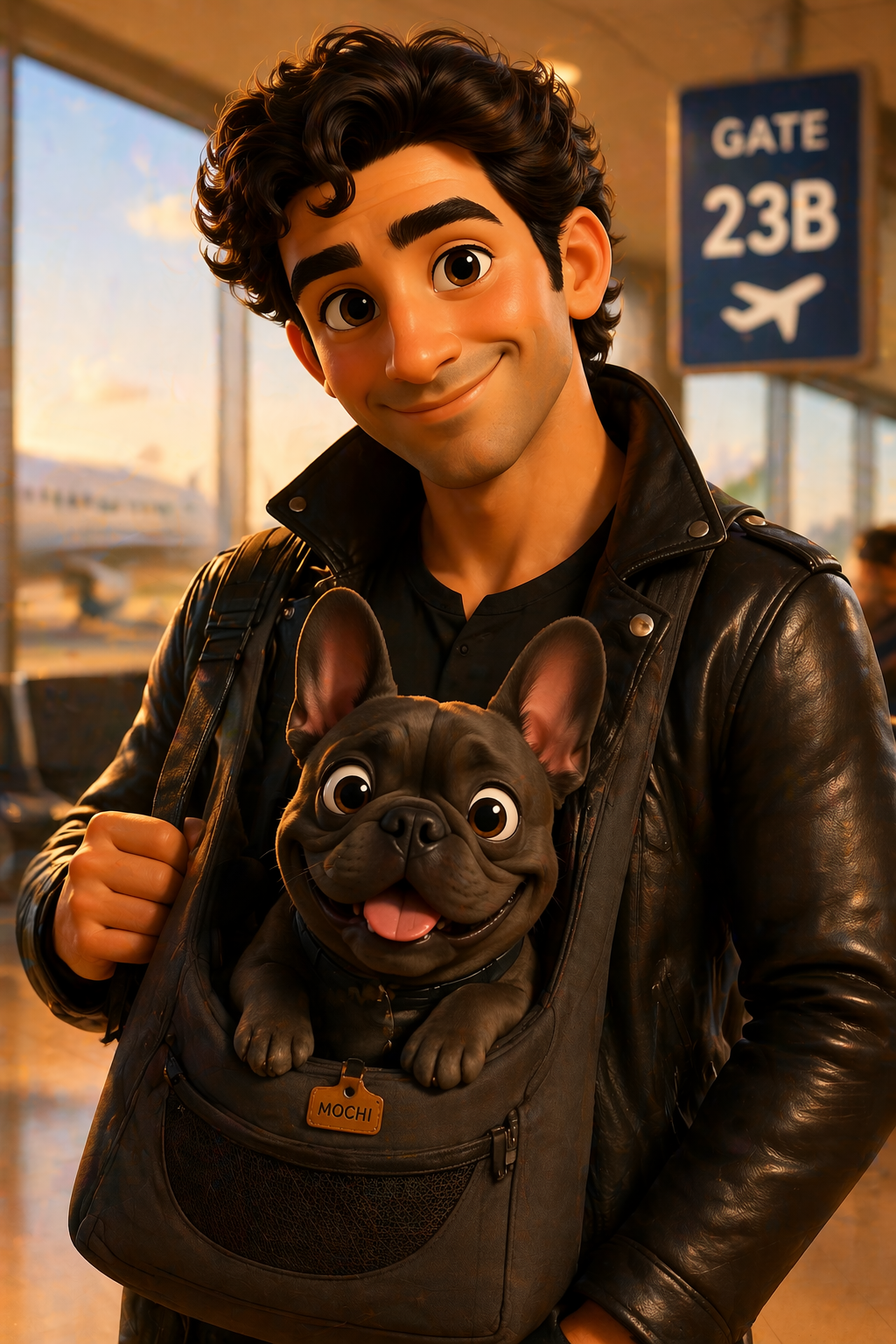
Marco · with Mochi (French Bulldog, 6kg) “Mochi judges the queue length, not me.” Meet all guides →
About this guide ↓
This guide was generated by Pawgo's AI using verified data from official sources. Marco is a fictional persona — the data is real.
Bermuda is British, but its pet-import rules are its own, and they reward precision. Mochi needed an import permit, a microchip and a health certificate dated inside a tight window before arrival, issued in the country she was flying from. Bermuda also publishes two breed lists, prohibited and restricted, and confusing them is the costliest mistake an owner can make here.
Pet import to Bermuda is regulated by Department of Environment and Natural Resources. The core requirements are summarized below: a microchip, a rabies vaccine within the right window, and a government-endorsed health certificate. Some destinations also require a titer test or short quarantine — those are flagged in the table.
Who sets the rules here
Bermuda sets its own pet-import rules. The national rules of the United Kingdom do not apply here.
Official source
gov.bm
Relationship to the United Kingdom
sets its own rules
How Bermuda handles your pet
Each fact comes straight from the operator’s published policy. Tap the to read the exact wording; the opens the source page.
Rabies vaccination · Waiting period after vaccination30 daysverified 2026-07-21
Rabies vaccination · Max vaccine age at travel12 monthsverified 2026-08-01
Rabies vaccination · Min age at vaccination12 weeksverified 2026-07-01
Timing chain
Day -90 microchip implant · Day -30 rabies vaccine deadline · Day -10 health certificate issued · Day 0 arrive at customs
Breed restrictions
Banned breeds: Argentine mastiff (Dogo Argentino), Boerboel (South African Mastiff), Brazilian Mastiff (Fila), Cane Corso, Neapolitan Mastiff, Presa Canario, Tosa Inu, Wolf, Wolf Hybrid, Any Cross of the above verified 2026-09-16
Restricted breeds: Akita, Australian Cattle Dog, American Bulldog, American Pit Bull Terrier, American Staffordshire Terrier, Belgian Malinois, Bouvier des Flandres, Bull Terrier, Bullmastiff, Cão de Fila de São Miguel (Azorean Cattle Dog), Chow Chow, Doberman Pinscher, Dogue de Bordeaux, Shepherd (all breeds thereof), Mastiff – English, Rhodesian Ridgeback, Rottweiler, Olde English Bulldogge, Staffordshire Bull Terrier, Any Cross of the above verified 2026-09-16
The veterinary health certificate must be issued within 10 days before arrival in Bermuda, and it must be issued in the country the animal is arriving from. That makes the departure point of the final flight the thing to confirm first, because it decides which veterinarian can sign the certificate and how close to the flight the appointment has to sit.
Bermuda separates prohibited breeds from restricted ones, and the difference is decisive. Prohibited breeds, including the Dogo Argentino, Boerboel, Brazilian Mastiff, Cane Corso, Neapolitan Mastiff, Presa Canario, Tosa Inu, wolves and wolf hybrids, cannot be imported. Restricted breeds such as the Rottweiler, Doberman Pinscher and all shepherd breeds can enter under permit once the import conditions are met.
The tight certificate window is where cost creeps in. A certificate issued more than 10 days before arrival is not accepted, so a delayed or rebooked flight can mean paying for a second veterinary visit. Booking the appointment only once the flight into Bermuda is confirmed, and after the import permit is in hand, keeps it to one visit.
Bermuda was straightforward for Mochi once I stopped treating it like the UK. Check the breed against both lists first, then apply for the import permit, confirm the microchip, and book the health certificate inside its 10-day window in the country the final flight leaves from. Mochi arrived with every document in order and no surprises. Build the plan around that final leg.
ISO 11784/11785 — the universal microchip standard.
FAVN
Fluorescent Antibody Virus Neutralization — a rabies serology test required by rabies-free destinations.
Brachycephalic
Snub-nosed breeds (French Bulldogs, Pugs, Persians, Himalayans) with restricted airline acceptance due to heat-stress risk.
AVIH
Animal Vehicle In Hold — IATA's term for cargo pet shipment, with fees that vary by carrier and route.
Auto-generated from verified government data · Last updated: August 14, 2026
Frequently Asked Questions
Does Bermuda require rabies vaccination for dogs?
Yes, Bermuda requires a rabies vaccination for imported dogs. There is a 30-day waiting period after vaccination. Exact timing depends on your origin country — compute your timeline at www.pawgo.fr.Build my pet's travel plan →
Does Bermuda require a microchip for pets?
Yes, Bermuda requires an ISO-compliant microchip. The microchip must typically be implanted before rabies vaccination. Get your full checklist at www.pawgo.fr.Build my pet's travel plan →
What health certificate does Bermuda require for pets?
Bermuda requires a veterinary health certificate for imported pets. It must be issued within 10 days of travel. Get exact document requirements at www.pawgo.fr.Build my pet's travel plan →
Do I need a pet import permit for Bermuda?
Yes, Bermuda requires an import permit for pets. Lead time varies — apply well in advance. Get your full preparation timeline at www.pawgo.fr.Build my pet's travel plan →
Does Bermuda have breed restrictions for pets?
Yes, Bermuda has breed-specific restrictions. Restricted breeds include: Argentine mastiff (Dogo Argentino), Boerboel (South African Mastiff), Brazilian Mastiff (Fila), Cane Corso, Neapolitan Mastiff. Check if your breed is affected at www.pawgo.fr.Build my pet's travel plan →
Does my pet need a microchip for Bermuda?
Yes. Bermuda requires an ISO-standard microchip. Bermuda has not published a rule on the order, so have it fitted before the rabies vaccination where you can — many countries and airlines require that sequence.Build my pet's travel plan →
How long before travel must the rabies vaccine be given for Bermuda?
The rabies vaccine must take effect at least 30 days before entry, and can be given from 12 weeks of age. Travelling before that window makes the vaccination invalid at the border.Build my pet's travel plan →
What if my flight is delayed past my health certificate validity?
If the certificate window expires before you board, you'll need a re-issue. Build a 1-2 day buffer between the cert date and departure to absorb minor delays.Build my pet's travel plan →
What happens if I forget a document?
At the destination airport: at best, an extended inspection while you produce backup; at worst, the pet is held in quarantine or returned to origin at your cost. Bring printed copies.Build my pet's travel plan →
Traveling to Bermuda?
Get a personalized travel checklist with exact deadlines for your pet.