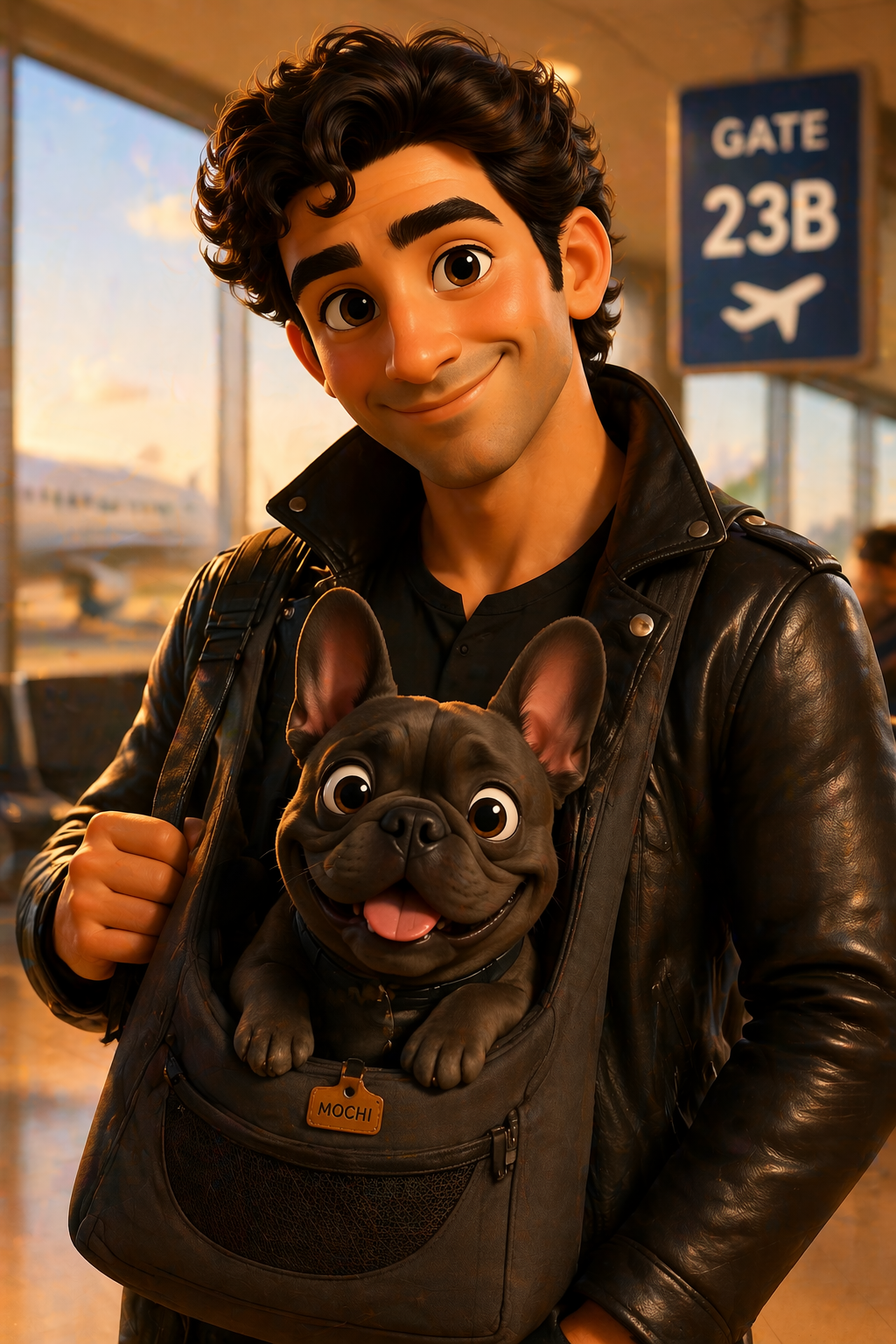
Gio traveling with Tafoukt the Border Collie mix (rescue from Morocco)
Gio · with Tafoukt (Border Collie mix (rescue from Morocco), 20kg)
“I rescued Tafoukt from a shelter in Morocco and brought her home to Paris.”
Meet all guides →
About this guide ↓

Bringing Your Pet to Botswana: A Complete Import Guide

Whether you're relocating to Gaborone with a rescue dog, moving your cat to the Kalahari, or bringing a beloved companion across continents, importing a pet into Botswana requires careful planning and specific documentation. I've guided rescue dogs from Morocco through similar journeys across borders—each one a small miracle of paperwork and patience. This guide walks you through every requirement, timeline, and practical step to make your pet's arrival smooth and legal.

The good news: Botswana welcomes both dogs and cats as personal pets. The reality: you'll need an import permit, current vaccinations, health certificates, and a microchip. Start early. Begin your preparations at least three to four months before departure.

What Pets Are Allowed?

Dogs and cats are permitted for import into Botswana as personal pets, provided they meet all health and documentation requirements. There are no breed restrictions for either species—so your rescue mix, your purebred, your three-legged wonder, they're all welcome.

Service dogs (trained guide dogs, hearing dogs, mobility dogs) are recognized under international standards, though we're still verifying Botswana-specific protocols—contact the Department of Veterinary Services for confirmation. Emotional support animals do not receive special import status and must follow standard pet import rules.

Your Preparation Timeline

4 Months Before Departure

Research and contact authorities. Email Botswana's Department of Veterinary Services to confirm current import requirements and obtain the official import permit application form. Requirements can shift, and you want the most current information directly from the source.

3.5 Months Before Departure

Get your pet microchipped. Your dog or cat must have an ISO 11784/11785 (15-digit) microchip implanted by a licensed veterinarian. This microchip must be in place before your pet receives its rabies vaccination—the order matters. If your pet already has a non-ISO chip, you'll need to provide your own compatible scanner or get a second ISO chip implanted.

3 Months Before Departure

Schedule rabies vaccination. Your pet must be at least 12 weeks (3 months) old to receive its first rabies vaccine. The vaccine must be administered by a licensed veterinarian and must be current at the time of travel. After the primary vaccination, you must wait a minimum of 21 days before your pet can travel. Plan accordingly—if you're departing in three months, vaccinate now.

2.5 Months Before Departure

Apply for the import permit. Submit your completed import permit application to Botswana's Department of Veterinary Services. The standard lead time is 30 days, but apply now to account for processing delays and any requests for additional information. You'll typically need your pet's microchip number, vaccination records, and owner details.

1 Month Before Departure

Schedule your health certificate exam. Book an appointment with a licensed veterinarian in your country of origin. The health certificate must be issued within 10 days of your departure date, so timing is critical. During this visit, the vet will examine your pet, verify vaccinations, and issue the official health certificate.

10 Days Before Departure

Obtain the health certificate. Visit your veterinarian for the official examination. The vet will issue a health certificate certifying that your pet is healthy and fit to travel. This certificate must then be endorsed by your country's government veterinary authority (e.g., USDA APHIS if you're in the United States, APHA if in the UK, CFIA if in Canada). This endorsement is a separate step and takes additional time—don't delay.

5–7 Days Before Departure

Confirm your import permit has arrived. Check that you've received the official import permit from Botswana's Department of Veterinary Services. Have it printed and ready. Verify that your pet's microchip number and other details match exactly on all documents.

2–3 Days Before Departure

Arrange airport logistics. Confirm your pet's airline booking and any carrier requirements. Pets entering Botswana must arrive through Sir Seretse Khama International Airport (GBE) in Gaborone—this is the only approved port of entry for pet imports. Notify your airline of your pet's arrival 48 hours in advance if required by their policy.

Day of Departure

Travel with all documents. Carry originals of your import permit, health certificate (government-endorsed), vaccination records, and microchip documentation. Keep these in a separate, easily accessible folder. Your pet will undergo veterinary inspection upon arrival at the airport.

Key Requirements Explained

Microchip (ISO 11784/11785)

Your pet must have an ISO 11784/11785 microchip—the universal 15-digit standard. This microchip must be implanted before rabies vaccination. If your pet has an older, non-ISO chip, you have two options: provide your own compatible scanner, or have a second ISO chip implanted. The microchip number will appear on all your import documents.

Rabies Vaccination

Rabies vaccination is mandatory. Your pet must be at least 12 weeks old at the time of vaccination. After the primary dose, you must wait a minimum of 21 days before travel. The vaccine must be current and administered by a licensed veterinarian. Booster vaccinations are required to maintain immunity—check your vet's recommendations for your pet's specific vaccine.

Health Certificate

An official health certificate issued by a licensed veterinarian is required. It must be issued within 10 days of your departure date and must be endorsed by your country's government veterinary authority. The certificate certifies that your pet is healthy and fit to travel. Without this endorsement, the certificate is not valid for international travel.

Import Permit

Botswana requires an import permit for all dogs and cats. Apply at least 30 days before your departure. Contact the Department of Veterinary Services for the application form and current requirements. The permit is non-negotiable—without it, your pet will not be allowed to enter the country.

Quarantine

Good news: if your pet arrives with complete, valid documentation (microchip, current rabies vaccine, health certificate, and import permit), quarantine is typically waived. Duration is 0 days for compliant arrivals. However, if documentation is incomplete or invalid, quarantine may be required—so don't cut corners on paperwork.

Ports of Entry

Your pet must enter through Sir Seretse Khama International Airport (GBE) in Gaborone. This is the only approved port of entry for pet imports into Botswana. Plan your flight accordingly.

Documents Checklist

  • Import permit (original, from Botswana Department of Veterinary Services)
  • Health certificate (issued by licensed vet, government-endorsed, dated within 10 days of travel)
  • Rabies vaccination record (proof of current vaccination)
  • Microchip documentation (ISO 11784/11785, implant date and number)
  • Proof of microchip implantation (from veterinarian)
  • Airline pet booking confirmation
  • Pet passport or vaccination booklet (if available)
  • Copy of your import permit approval email

Common Mistakes to Avoid

  • Vaccinating before microchipping. The microchip must come first. If you vaccinate first, you may need to re-vaccinate after the chip is implanted.
  • Waiting until the last minute for the health certificate. It must be issued within 10 days of departure and endorsed by your government authority. Start this process at least three weeks before travel.
  • Forgetting the government endorsement. A vet-issued health certificate alone is not enough. It must be endorsed by your country's veterinary authority (USDA APHIS, APHA, CFIA, etc.).
  • Not applying for the import permit early enough. The standard lead time is 30 days. Apply at 3.5 months to avoid delays.
  • Flying into the wrong airport. Only Sir Seretse Khama International Airport (GBE) in Gaborone accepts pet imports. Verify your flight routing.
  • Assuming your old microchip is ISO-compliant. If it's not, you'll need a compatible scanner or a second chip. Confirm with your vet.

A Note on Rescue Pets and International Travel

I've spent years moving rescue dogs from shelters in Morocco to families across Europe. The infrastructure for international pet travel—permits, vaccinations, health certificates—exists partly to protect animal welfare. Yes, it's bureaucratic. Yes, it takes time. But it works. A dog like Tafoukt, my 20kg Moroccan rescue, wouldn't have made it safely to Paris without these systems. When you follow these requirements for Botswana, you're not just ticking boxes. You're ensuring your pet arrives healthy, legally, and ready to thrive in their new home. Shelters across Africa and beyond need this same infrastructure. Every properly documented pet import strengthens the case for better animal welfare globally.

Next Steps

Start with a call or email to Botswana's Department of Veterinary Services. Get the official import permit application form and confirm any updates to these requirements. Then work backwards from your departure date using the timeline above. Book your vet appointments early—good vets fill up quickly, especially during peak travel seasons.

If you're traveling with your pet on an airline, check their specific pet policies. British Airways, Air France, and other carriers serving Botswana have their own rules about pet carriers, fees, and advance notice.

Get your free personalized travel plan from Pawgo to organize your pet's import timeline and document checklist.

This guide is based on verified data from official government sources. Requirements can change—always confirm current regulations with Botswana's Department of Veterinary Services before finalizing your travel plans.

Auto-generated from verified government data · Last updated: April 22, 2026