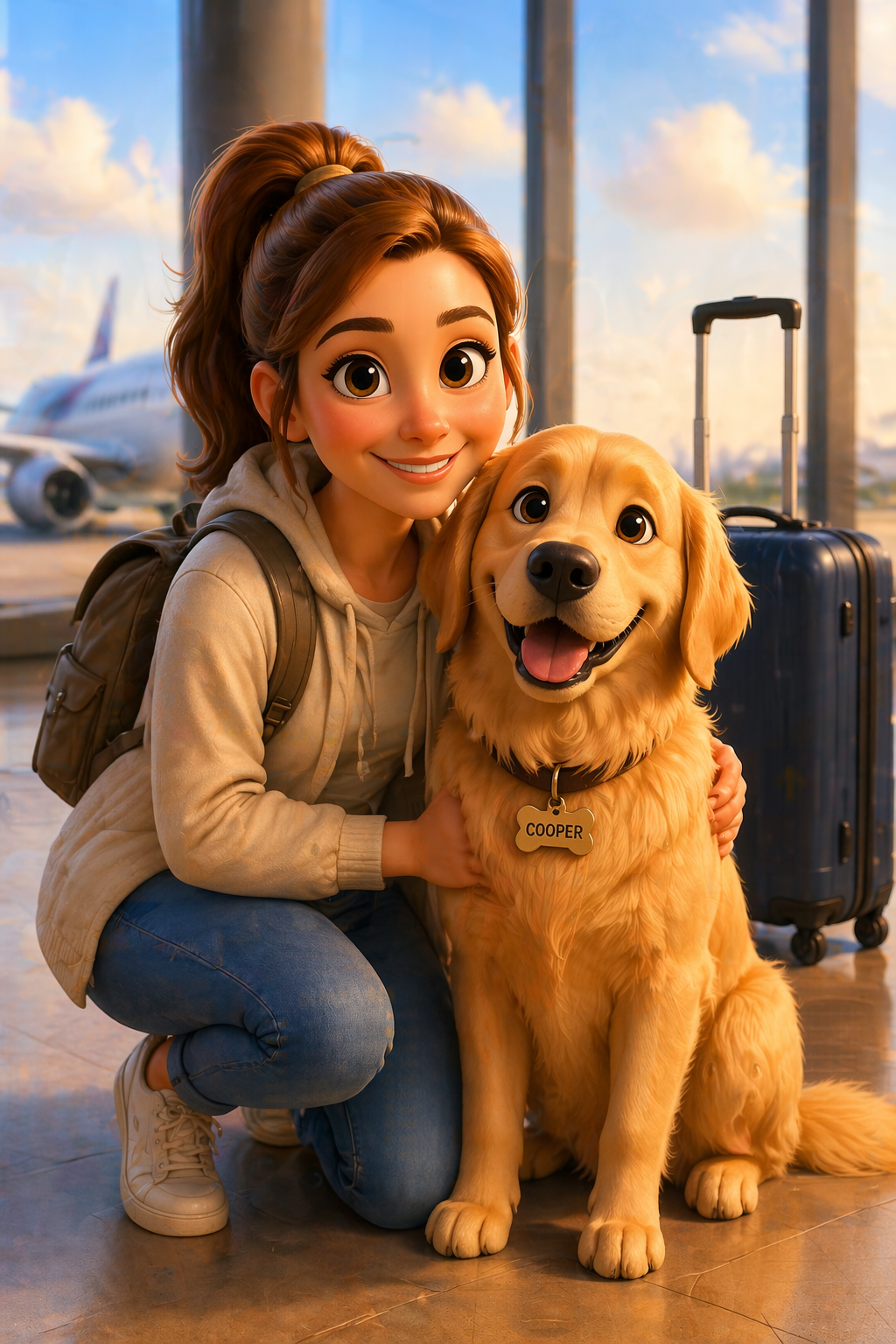
Moving Your Pet from Japan to the United States: A Complete Relocation Guide
I'll never forget the moment my boss told me about the job opportunity in the States. My heart sank—not because of the career move, but because of Koda. My 25kg Labrador mix had been my constant companion through five years in Tokyo. The thought of leaving him behind was unthinkable. But bringing him across the Pacific? That seemed impossibly complicated. I had no idea where to start.
If you're facing the same decision, I want you to know: it's absolutely doable. It's just not quick, and it requires patience, planning, and a lot of paperwork. Over the next seven months, I learned more about international pet regulations than I ever thought I would. This guide is everything I wish I'd known when I started.
The Reality Check: Timeline and Costs
Let me be honest with you upfront. Moving Koda from Japan to the United States wasn't a three-month process. The minimum timeline is seven months from the moment you microchip your pet and give their first rabies vaccination. This isn't bureaucratic bloat—it's a safety requirement, and both countries take it seriously.
Here's why it takes so long: Japan is officially rabies-free, and they want to keep it that way. They require a 180-day waiting period after your pet's rabies titer test (a blood test proving immunity) before they'll even consider letting your pet leave the country. Meanwhile, the United States has its own documentation requirements. These timelines overlap somewhat, but you can't compress them.
I started Koda's process in January. We didn't board the plane until August. Those seven months felt long, but they flew by once I had a clear checklist.
Step 1: Microchipping (Months 1-2)
This is where everything begins. Both Japan and the United States require a microchip, and here's the critical part: the microchip must be placed before your pet's first rabies vaccination. If you vaccinate first, the vaccination is invalid in Japan's eyes.
The microchip standard is ISO 11784/11785. When I took Koda to our vet in Shibuya, she scanned him after insertion to confirm it was readable. Make sure your vet does this too. You'll need the microchip number for all future paperwork.
Cost: ¥3,000–5,000 (roughly $20–35 USD). Minimal, but essential.
Step 2: Rabies Vaccinations and Titer Testing (Months 2-6)
This is the longest and most complex part of the process. Japan requires two rabies vaccinations: a primary vaccination and a booster at least 30 days later. Your pet must be at least 13 weeks old at the time of the first vaccination.
After the second vaccination, you must wait at least 30 days before having a blood titer test performed. This test measures your pet's rabies antibody levels to confirm immunity. The test must be done at an OIE-approved laboratory—Japan accepts labs like APHA Weybridge, Kansas State University, or Anses Nancy. Your vet can arrange this; they'll draw the blood and send it to the approved lab.
The titer result must show at least 0.5 IU/mL. When Koda's results came back, I felt a wave of relief—he was at 1.2 IU/mL, well above the threshold.
Here's the hard part: after a satisfactory titer test, you must wait 180 days before your pet can enter the United States. This is Japan's requirement, and it's non-negotiable. I scheduled Koda's titer test for mid-March specifically so the 180-day window would end in mid-September, giving me flexibility for flight booking.
Cost: ¥8,000–15,000 for vaccinations; ¥15,000–25,000 for the titer test. Budget roughly $150–250 USD total.
Step 3: Health Certificate and Government Endorsement (Month 6-7)
Once your 180-day waiting period is nearly complete, you'll need a health certificate issued by an official government veterinarian in Japan. This certificate must be endorsed by the Japanese government authority (the Japan Animal Quarantine Service). It's valid for only 10 days, so time this carefully—you don't want to issue it too early.
I scheduled Koda's health certificate for one week before our flight. Our vet submitted it to the local quarantine office for endorsement, and we had it back within two days.
Cost: ¥5,000–8,000 ($35–55 USD).
Step 4: Import Permit and Advance Notification (Month 6-7)
Japan requires you to submit a Notice of Importation (Form A) to the Japan Animal Quarantine Service at least 40 days before your pet's arrival in the United States. This isn't an import permit for the US—it's a notification to Japan that you're exporting your pet.
Your vet or a pet relocation service can help with this. I worked with our vet, who had done this many times before. The form requires your pet's microchip number, vaccination records, titer test results, and flight details.
The United States doesn't require a general import permit for pets, but the CDC requires a Dog Import Form (CDC 6.2) for all dogs. You'll fill this out and submit it along with your health certificate and vaccination records.
Cost: Usually included in your vet's service fee, or $50–100 if using a pet relocation service.
Step 5: Choosing Your Airline and Booking
This is where I hit my first real obstacle. Koda weighs 25kg. Most airlines serving the Japan-US route have an 8kg cabin weight limit. Koda couldn't fly with me in the cabin—he had to go cargo.
Here's what I found:
| Airline | Cabin | Cargo | Brachycephalic OK | Weight Limit | Cabin Fee |
|---|---|---|---|---|---|
| Air France | Yes | Yes | No | 8 kg | €75 |
| Lufthansa | Yes | Yes | No | 8 kg | €75 |
| Delta Air Lines | Yes | Yes | No | 8 kg | $125 |
| British Airways | No | Yes | No | 8 kg | — |
| Singapore Airlines | No | No | No | 8 kg | — |
I chose Delta Air Lines because they had good cargo handling reviews and flew direct from Tokyo Narita to Atlanta. Cargo shipping cost roughly $2,500–3,500 depending on the crate size and weight.
Important: Japan only allows pets to depart from four airports with Animal Quarantine Service inspection facilities: Tokyo Narita (NRT), Tokyo Haneda (HND), Osaka Kansai (KIX), and Nagoya Chubu (NGO). You must notify the AQS at least 40 days before your departure date.
Step 6: Preparing for Arrival in the United States
The United States doesn't require quarantine for compliant pets—and Koda was fully compliant. However, you'll need to arrange for a veterinary inspection at your port of entry. I contacted the CDC and confirmed that Delta's cargo facility in Atlanta had a veterinarian on staff.
The CDC requires the Dog Import Form (CDC 6.2), your pet's health certificate, rabies vaccination records, and titer test results. I compiled everything into a folder and brought originals plus copies to the airport.
Cost: Veterinary inspection at arrival is typically included in the airline's cargo service, though some ports charge $50–150 for inspection.
The Emotional Journey
I won't sugarcoat this: putting Koda on a cargo flight was one of the hardest moments of the move. I watched him walk into the cargo area, his tail wagging, completely unaware that he was about to spend 12 hours in the belly of a plane. I cried in the airport bathroom.
But he arrived in Atlanta safe, healthy, and happy. The cargo staff had kept him calm, and within hours of landing, I had him in my arms at our new home in Georgia. All those months of paperwork, all the vet visits, all the waiting—it was worth it to have him with me.
Key Takeaways for Your Pet's Journey
- Start early. The minimum timeline is 7 months. Don't wait.
- Microchip before vaccination. This is non-negotiable for Japan.
- Plan for the 180-day wait. This is Japan's requirement after your pet's titer test.
- Use an approved lab for titer testing. APHA Weybridge, Kansas State University, and Anses Nancy are all acceptable.
- Notify the Japan Animal Quarantine Service 40+ days before departure. This is a legal requirement.
- For large dogs, expect cargo travel. Most airlines have 8kg cabin limits.
- Keep copies of everything. Health certificates, vaccination records, titer results, microchip documentation—bring it all.
Resources and Next Steps
For detailed checklists and step-by-step guidance, check out our documents checklist and flying with a dog guide. If your pet is a brachycephalic breed (flat-faced), review our brachycephalic breed guide—many airlines ban these breeds from cargo.
Your vet is your best ally in this process. Mine walked me through every step and even helped with the paperwork. Don't hesitate to ask questions or request referrals to pet relocation services if you need extra support.
Get your free personalized travel plan from Pawgo to organize your pet's specific requirements and timeline.
Note: This guide is based on official requirements from the Japan Animal Quarantine Service and the US CDC, verified as of April 2026. Regulations change periodically. Always confirm current requirements with the relevant authorities before beginning your pet's relocation process.